
What Do You Need Before Building a Mobile App? 10 Things to Consider
A practical, example-driven checklist covering what to define, budget and plan before you start building a mobile app, plus when NOT to build one.
Mohan
Contents
Updated: August 2026
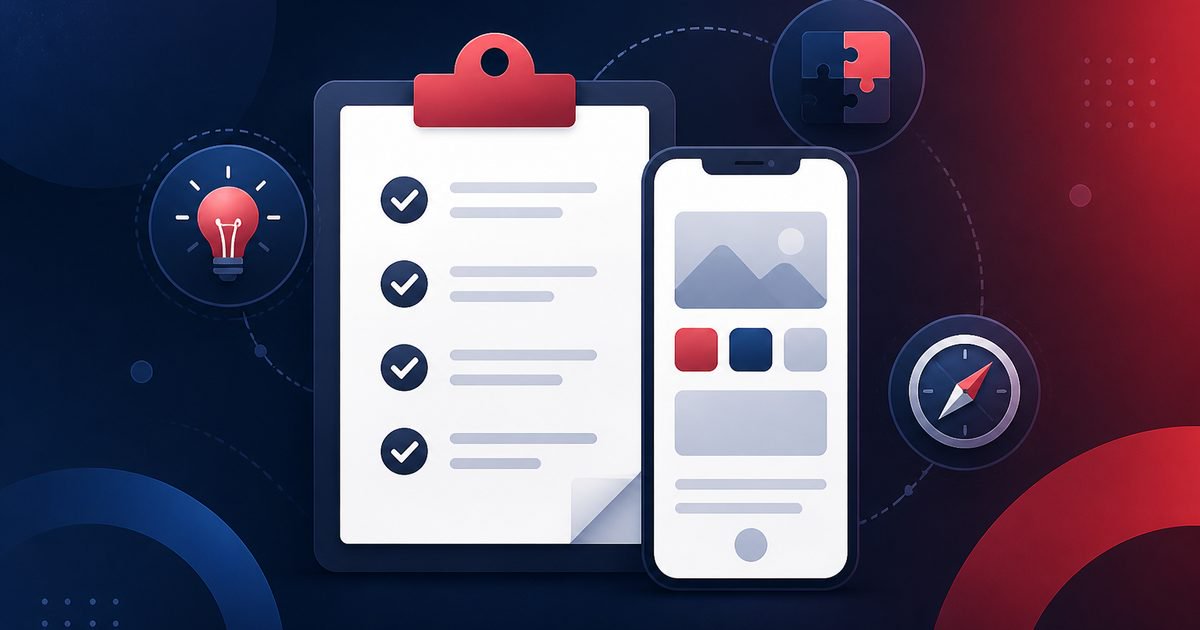
Before building a mobile app, you need more than an idea. You need a clear business problem, a defined target user, a scoped MVP, a realistic budget, a technology decision, and a plan for what happens after launch. The single biggest reason mobile app projects go over budget or stall halfway through isn't bad developers, it's starting development before deciding what the app actually needs to accomplish.
We'll use one example throughout this guide: imagine you run "Milo's Bakery," a local bakery chain with three locations, and you're considering building an app for online ordering and a loyalty program. Every section below comes back to that example, so the checklist stays concrete instead of abstract.
Key Takeaways
Swipe, or use the arrows on each card →
10 Things to Consider Before Building a Mobile App
Here's the full checklist, in the order it actually needs to happen. Skipping ahead (especially to "choose a platform" or "hire a developer") before the earlier steps is the single most common way businesses overspend.
1. Define the actual business problem
Not "we need an app," but the specific problem it solves. For Milo's Bakery, that might be: "Customers call in orders during the morning rush and our staff can't keep up, leading to lost sales and long lines." That's a real problem an app can solve. "Our competitors have an app" is not.
2. Know exactly who the user is
For Milo's Bakery, the user isn't "bakery customers" in general, it's specifically repeat customers who already visit weekly and would order ahead to skip the line. Designing for that specific person changes what the app actually needs, versus designing for a vague "everyone."
3. Research what's already out there
Look at direct competitors and adjacent apps solving a similar problem (a coffee shop's ordering app, a food delivery app's pickup flow). You're not copying, you're learning what already works so you don't rediscover the same lessons the expensive way.
4. Decide the one core workflow (your MVP)
Milo's Bakery doesn't need loyalty points, push notifications and gift cards on day one. It needs one thing to work well: browse the menu, place an order, pay, get notified when it's ready. Everything else is version two.
5. List features, then ruthlessly prioritize
Split every feature idea into three buckets: must-have for the core workflow, valuable but not urgent, and nice-to-have. Build only the first bucket for launch. This is the single most effective way to control both cost and timeline.
6. Choose your platform honestly
For most businesses like Milo's Bakery, the real choice isn't iOS vs Android, it's cross-platform vs native. A cross-platform framework like Flutter builds one codebase for both iOS and Android, which is faster and cheaper for most business apps. Native development (built separately, twice) only earns its cost when you need deep, platform-specific capability most business apps don't need.
7. Set a realistic budget before you fall in love with features
Decide what you can actually spend first, then scope features to fit it, not the other way around. It's far easier to trim a feature list to match a budget than to explain a budget overrun after development has already started.
8. Plan the backend, not just the app screens
An ordering app needs somewhere to store orders, menu items, and payment records, and a way for Milo's Bakery staff to see and manage incoming orders. That backend and admin view is often as much work as the customer-facing app itself, and it's frequently forgotten when people scope "an app" as just the screens a customer sees.
9. Choose who's actually going to build it
In-house hiring, a freelancer, or an app development company each have real tradeoffs in cost, speed and ongoing reliability. The right choice depends mostly on whether you have technical people in-house already and how fast you need to launch, more on this in a dedicated comparison below.
10. Plan for after launch, not just launch day
Budget for bug fixes, OS updates (iOS and Android both change requirements periodically), and adding the features you deliberately left out of the MVP. An app that stops getting updated quietly breaks over time as phone operating systems move on without it.
When You Should NOT Build an App
This list wouldn't be honest without this section. A mobile app is the wrong investment when:
- Your customers don't visit repeatedly. Apps earn their cost through repeat use. A one-time-purchase business rarely gets enough repeat opens to justify app store maintenance.
- A mobile website already does the job. If you don't need offline access, push notifications, camera, or GPS, a responsive website is cheaper to build, doesn't require an app store download, and reaches everyone instantly via a link.
- You haven't validated the demand yet. If you're not sure customers actually want this, a simple website or even a WhatsApp-based ordering flow can validate the idea for a fraction of the cost before you commit to app development.
For Milo's Bakery specifically, the repeat-customer behavior (regulars visiting weekly) and the clear operational problem (phone orders overwhelming staff) are exactly the signals that justify building an app rather than just improving the website.
How Much Should You Budget?
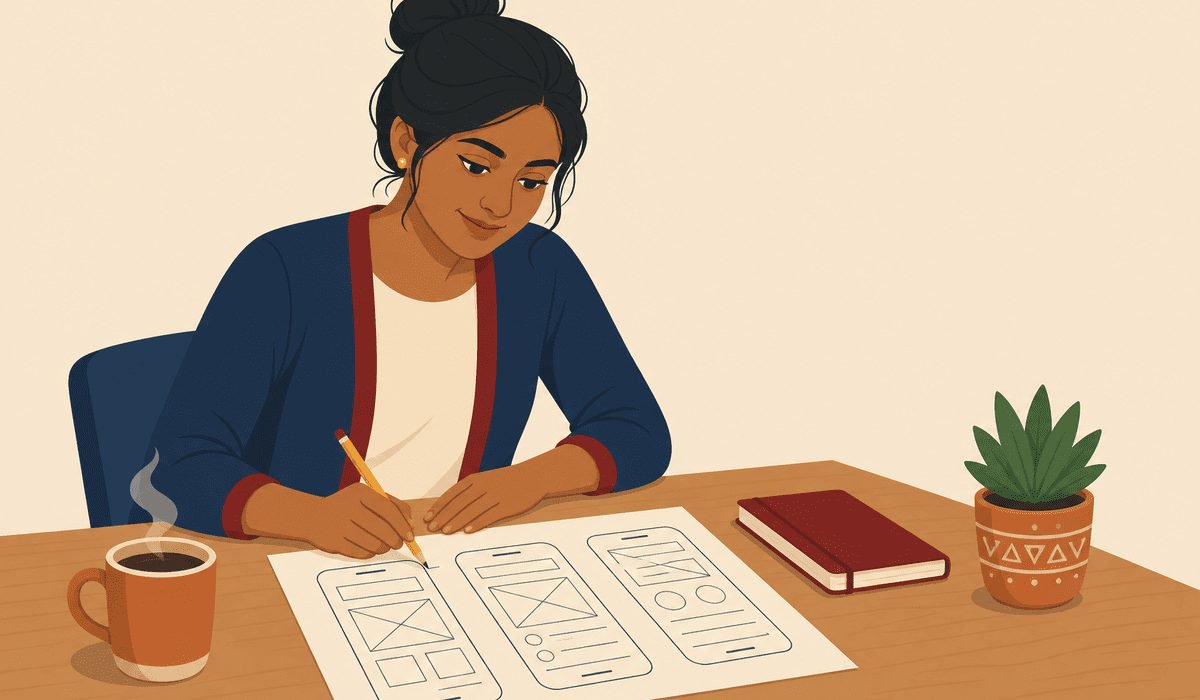
Costs vary enormously by scope, but as a rough starting point: a focused MVP (one core workflow, basic backend, minimal admin tools, like Milo's Bakery's order-and-pay flow) costs meaningfully less than a full platform with loyalty programs, push notifications, multi-location management and detailed analytics built in from day one. The features you cut in step 5 above are exactly what moves a project from one tier to the next, so a tight, honest feature list is the biggest lever you have on cost. If you want a number specific to your actual idea, our Quick MVP team will scope it with you directly rather than guessing over email.
In-House, Freelancer, or an App Development Company?
Briefly, since this deserves its own full comparison: building in-house makes sense if you already have engineering talent and this app is core to your long-term product. A freelancer can work for a very narrow, well-defined scope. For most businesses like Milo's Bakery, an experienced app development company is the middle ground, no hiring overhead, faster time to market, and a team that's already solved the backend/admin/deployment problems before. Our mobile app development team can walk you through what that actually looks like for your specific idea.
How Smarteer Approaches This
We start every mobile app project with exactly the sequence in this guide: define the problem and user first, scope a real MVP, then build backend and app in parallel once the API is agreed on. We build cross-platform with Flutter for most business apps to keep first-version costs sane, with a backend designed so the features you deliberately cut for launch can be added later without a rebuild. If you're at the "should we even build this" stage, that's exactly the conversation to have with us before any code gets written.
Frequently Asked Questions
What do I need before building a mobile app?
A clearly defined business problem, a specific target user, a scoped MVP with prioritized features, a realistic budget, a platform decision, and a plan for who builds and maintains it after launch.
Should my business build a mobile app?
Only if customers use your service repeatedly, or the app needs mobile-specific capability like offline access, camera, GPS or push notifications. If neither applies, a mobile website is usually the better investment.
How much does it cost to build a mobile app?
It depends heavily on scope. A focused MVP with one core workflow costs meaningfully less than a full platform with multiple features, admin tools and integrations. Prioritizing ruthlessly at the planning stage is the biggest lever on final cost.
Should I build in-house or hire an app development company?
In-house makes sense if you already have engineering talent and the app is core to your long-term product. Otherwise, an experienced app development company usually gets you to market faster without the overhead of hiring a team from scratch.
What's the biggest mistake businesses make before building an app?
Starting development before deciding what the app actually needs to accomplish. Skipping straight to "which platform" or "which developer" without first defining the problem, user and MVP is what causes most budget overruns and stalled projects.
Conclusion
Building a mobile app is a sequence of decisions, not a single one. Get the first few right (the problem, the user, the MVP) and the rest (platform, budget, who builds it) become much easier calls. If you're working through this for your own business, get in touch with Smarteer and we'll help you think it through properly before committing to a build.
About Smarteer
Smarteer is a full-service digital technology agency based in Chennai. We're a trusted provider of custom software, website and application development services and solutions that drive efficiency and deliver measurable cost savings and revenue gains for our client partners.
Mohan
CEO of Smarteer
Get a Free Technology Consultation
Talk to our experts about your project — no commitment required.
Book a Call →Build Your MVP in 4 Weeks
Proven framework. Fixed price. From zero to live product.
Learn More →Newsletter
Get the latest insights delivered to your inbox.