

How AI Agents Are Helping Businesses 5x Their Profit
AI agents are transforming business operations companies deploying them report 5x revenue gains by doing more per employee, per dollar, and per hour.
Mohan
Contents
The business landscape is shifting faster than most organizations can adapt. Companies that once competed on headcount, brand recognition, or operational efficiency are now being outpaced by leaner rivals deploying a new class of technology: AI agents. These are not chatbots or simple rule-based scripts. They are autonomous software systems capable of reasoning, planning, and executing complex workflows with minimal human oversight. Businesses that have integrated AI agents into their core operations are reporting profit multipliers that would have seemed implausible just two years ago. Understanding how they work, and where the leverage actually comes from, is the first step toward capturing those gains for your own organization.
The Difference Between AI Agents and Everything That Came Before
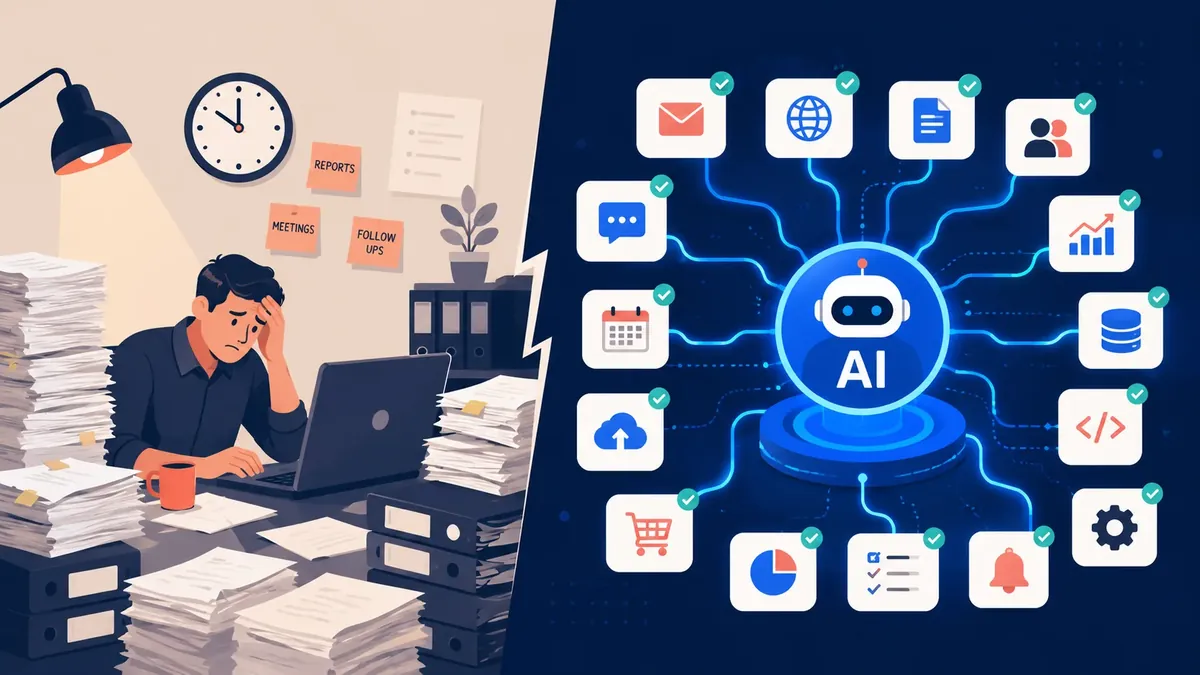
Most business leaders have encountered AI in one of two forms: a chatbot that handles simple customer queries, or a rules-based automation tool that executes predefined sequences. Both are useful. Neither is transformative. AI agents occupy an entirely different category. Where a chatbot responds to a question, an AI agent can identify a trend in customer support tickets, draft a knowledge base article to address the root issue, publish it to your website, and flag the underlying product defect to your engineering team, all from a single trigger event.
The key distinction is agency: the ability to perceive context, set sub-goals, use tools like web browsers, APIs, code interpreters, and file systems, and chain together multi-step workflows without a human directing each step. This is not marginal improvement over prior automation. It is a qualitative leap in what software can accomplish on behalf of a business.
When one AI agent can handle work that previously required a coordinated team, and do it continuously at scale, the unit economics of your business change fundamentally. That is the origin of the 5x profit opportunity, and it is not theoretical. It is already happening across industries.
Scaling Revenue Without Scaling Headcount
The most direct path to higher profit is growing revenue without proportionally increasing costs. AI agents make this possible by taking over revenue-generating tasks that previously required skilled, expensive human time. Outbound sales is one of the clearest examples. A well-configured AI agent can research prospects, personalize outreach based on their recent online activity, execute follow-up sequences, qualify responses, and schedule discovery calls, with no human involvement until the meeting is on the calendar.
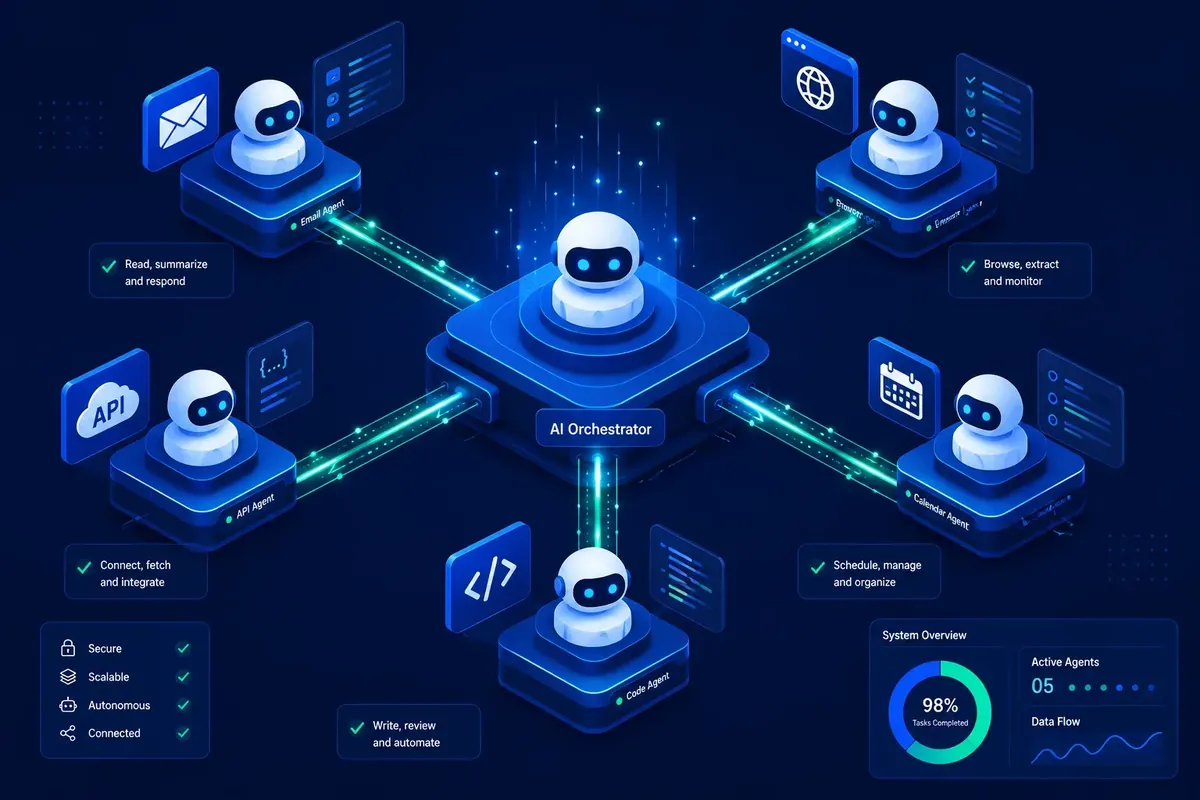
Agencies and sales teams using AI agents for pipeline management report handling four to eight times more opportunities than their headcount would otherwise allow. The same compounding effect applies to content marketing. An AI agent can produce SEO-optimized product descriptions for thousands of SKUs overnight, monitor competitor pricing and update yours in response, and generate weekly client performance reports that previously took an analyst two full days to compile.
The result is a business that earns more revenue per employee, per dollar of overhead, and per hour of operating time. That is not a marginal efficiency gain. It is a structural advantage that accumulates over time, widening the gap between organizations that have adopted AI agents and those still operating on legacy workflows.
Compressing Operational Costs Across Every Function
Profit is not only about revenue growth. It is equally about what you keep. AI agents are proving to be powerful cost-reduction tools across operations, finance, legal, and HR functions, not by eliminating jobs wholesale, but by dramatically reducing the hours that skilled employees spend on repetitive, low-judgment tasks.
Consider what this looks like in practice across a mid-sized business:
Finance: AI agents can reconcile accounts, flag anomalies, and generate monthly close reports with a fraction of the manual effort previously required.
Legal and compliance: Contract review workflows that once required hours of attorney time can be handled by agents trained on your legal templates and risk thresholds.
HR and recruitment: Agents can screen resumes, schedule interviews, send candidate communications, and compile hiring scorecards automatically.
Customer support: Beyond answering questions, agents can resolve issues, process refunds, update account details, and escalate only the cases that genuinely require a human decision.
When these savings compound across multiple departments simultaneously, the cost reduction can be substantial. Businesses that have deployed agents across three or more functions typically report operational cost reductions in the range of 30 to 50 percent within the first year, without reducing service quality or output volume.
Unlocking Revenue Streams That Were Previously Inaccessible
Perhaps the most underappreciated dimension of the AI agent advantage is the ability to pursue revenue opportunities that were simply not viable before. Many high-value business activities, such as hyper-personalized marketing at scale, continuous competitive intelligence, or real-time pricing optimization, require more data processing and faster execution than human teams can manage. AI agents remove that constraint entirely.
A retail business, for example, can deploy agents that monitor competitor inventory and pricing across dozens of platforms in real time, adjusting its own listings automatically to stay competitive without sacrificing margin. A B2B services firm can use agents to monitor news and financial filings for signals that a prospect is entering a buying cycle, triggering personalized outreach at exactly the right moment. A media company can use agents to localize content across multiple languages and regional markets simultaneously, reaching audiences that would have required dedicated translation and editorial teams to serve.
These are not hypothetical use cases. They are live deployments generating measurable returns. The common thread is that AI agents allow businesses to operate at a level of breadth and speed that was previously reserved for organizations with much larger teams and budgets.
Implementation: Where Businesses Go Wrong and How to Avoid It
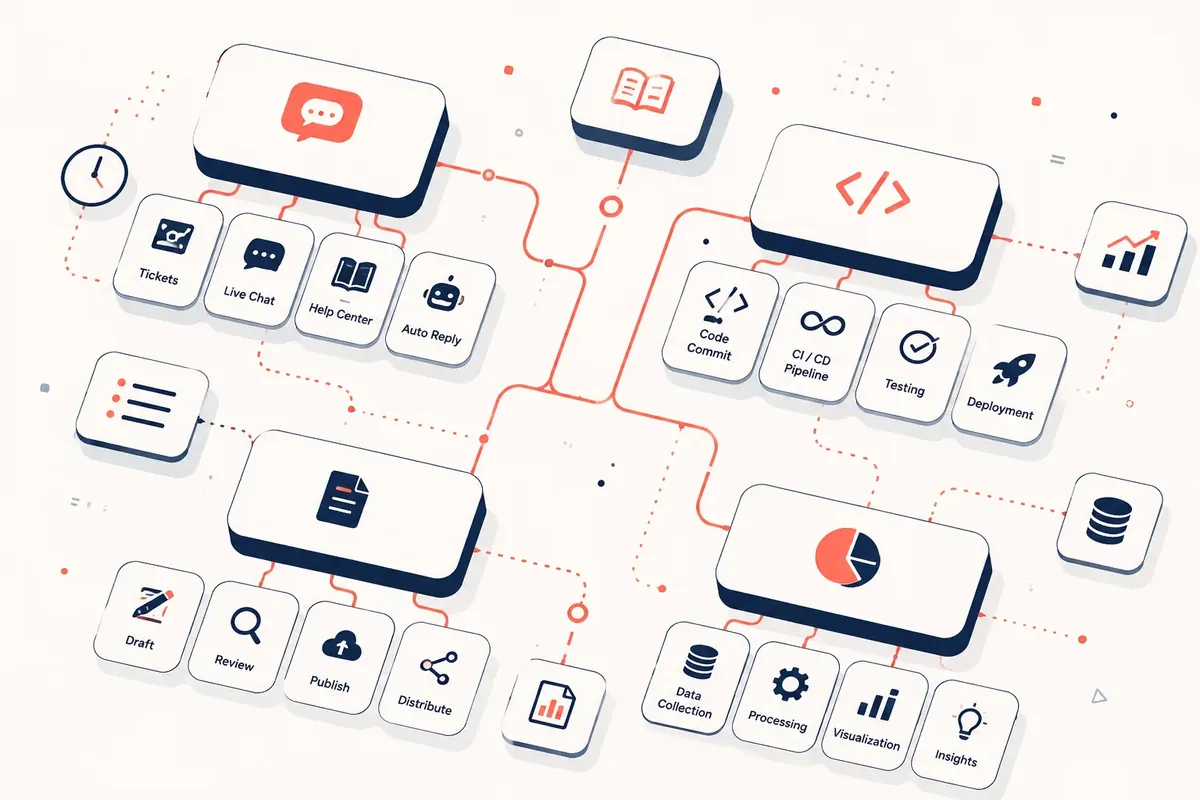
Despite the clear upside, many businesses underperform on their AI agent investments because they approach implementation incorrectly. The two most common mistakes are starting too broadly and underinvesting in the data and workflow design that agents depend on to operate effectively.
The most successful deployments share a common pattern: they start with a single, well-defined workflow, measure the output carefully, and expand from there. A business that attempts to automate ten processes simultaneously often ends up with ten half-working systems. A business that automates one process completely, iterates on the outputs, and then replicates the model across other functions builds compounding momentum instead.
Equally important is recognizing that AI agents are not a plug-and-play solution. They require clean data inputs, clearly defined success criteria, and a human review process for edge cases, at least initially. The businesses achieving 5x profit gains are not simply buying software. They are redesigning workflows with agents as a core component, training their teams to work alongside them, and continuously refining agent behavior based on observed outputs.
Positioning Your Business to Capture the Gains
The window for early-mover advantage in AI agent adoption is real but not unlimited. As the technology matures and deployment costs continue to fall, the organizations that have already built internal competency will have a significant head start on those that are still evaluating whether to begin. The question for most business leaders is not whether AI agents will reshape their industry. It is whether they will be the ones doing the reshaping or the ones being reshaped.
The path forward does not require a complete organizational overhaul. It requires identifying the workflows in your business where high-volume, multi-step tasks are consuming skilled human capacity, and asking whether an AI agent could handle those tasks more efficiently. In most businesses, the answer is yes in more places than leadership initially expects.
The 5x profit multiplier is not a marketing claim. It is the outcome of deploying a technology that fundamentally changes the ratio between input and output across your entire operation. The businesses achieving it started by taking one concrete step: they stopped treating AI as an experiment and started treating it as infrastructure.
If you are ready to move beyond evaluation and into implementation, the most valuable next step is an audit of your highest-cost, highest-volume workflows. That audit will reveal where your first AI agent deployment should begin, and it will give you a clear baseline against which to measure the returns. Start there, measure rigorously, and scale what works. That is the formula the most profitable early adopters are already executing.
Mohan
CEO of Smarteer
Get a Free Technology Consultation
Talk to our experts about your project — no commitment required.
Book a Call →Build Your MVP in 4 Weeks
Proven framework. Fixed price. From zero to live product.
Learn More →Newsletter
Get the latest insights delivered to your inbox.