

How to Write a Blog Post That Ranks on Google in 2025: A Practical SEO Guide
Learn how to write a blog post that ranks on Google in 2025. Practical SEO blog writing tactics for SMBs and creators, including keyword strategy, E-E-A-T, and on-page optimization.
Smarteer Team
Contents
Over 96% of content published online gets zero organic traffic from Google. Zero. Not a trickle, not a slow start. Nothing. If you're putting real effort into blog writing and watching your posts disappear into the void, you're not alone, and you're almost certainly making a few fixable mistakes that experienced SEO practitioners catch immediately.
This guide covers exactly what it takes to write blog content that earns page-one rankings in 2025, from choosing the right keyword angle to structuring your post in a way that satisfies both search intent and the humans who actually read it. We'll look at on-page signals, content depth, E-E-A-T principles, and the specific tactics that separate posts that rank from posts that don't.
Whether you're running content for a growing startup, managing a team of writers at an agency, or trying to build organic traffic for your own brand, these principles apply across verticals. For SMBs and creators working with limited resources, the approach here is also designed to be practical, not theoretical. Let's get into it.
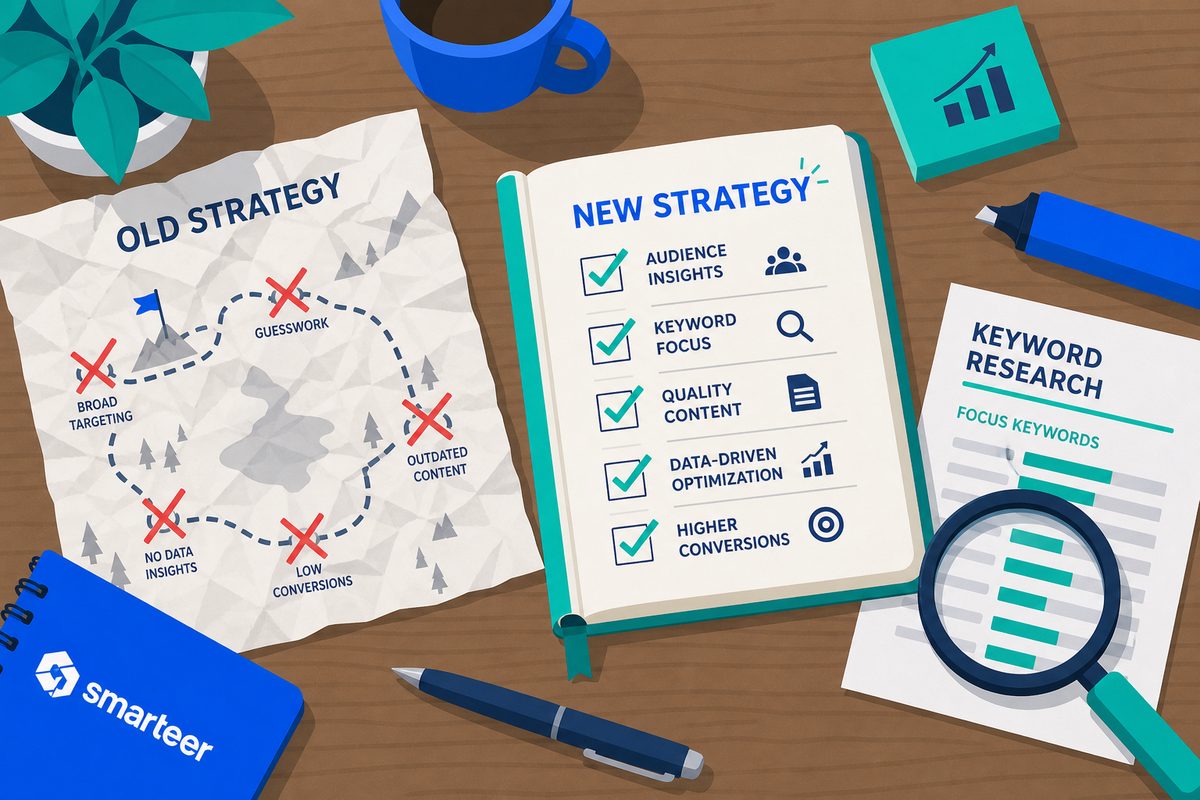
Why Most Blog Posts Fail Before They're Even Published

The problem usually isn't writing quality. It's strategy. Most blog posts are written to answer the question the writer wants to answer, rather than the question the reader is actually searching for. That gap, between what you assume people want and what they're genuinely typing into Google, is where most content dies.
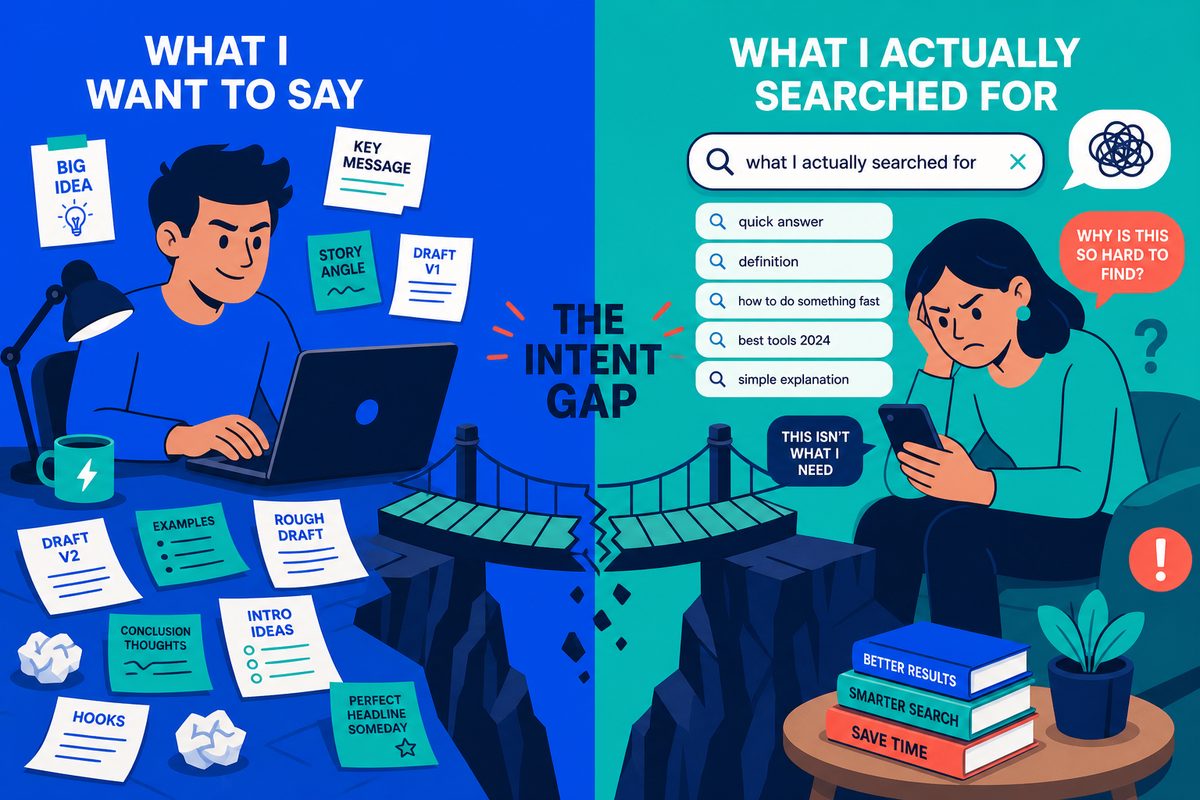
Google's systems have gotten significantly better at identifying search intent. A post that answers "how to start a blog" will not rank for "how to monetize a blog" even if both topics appear in the article. The intent is different. The audience is different. The content structure needs to be different.
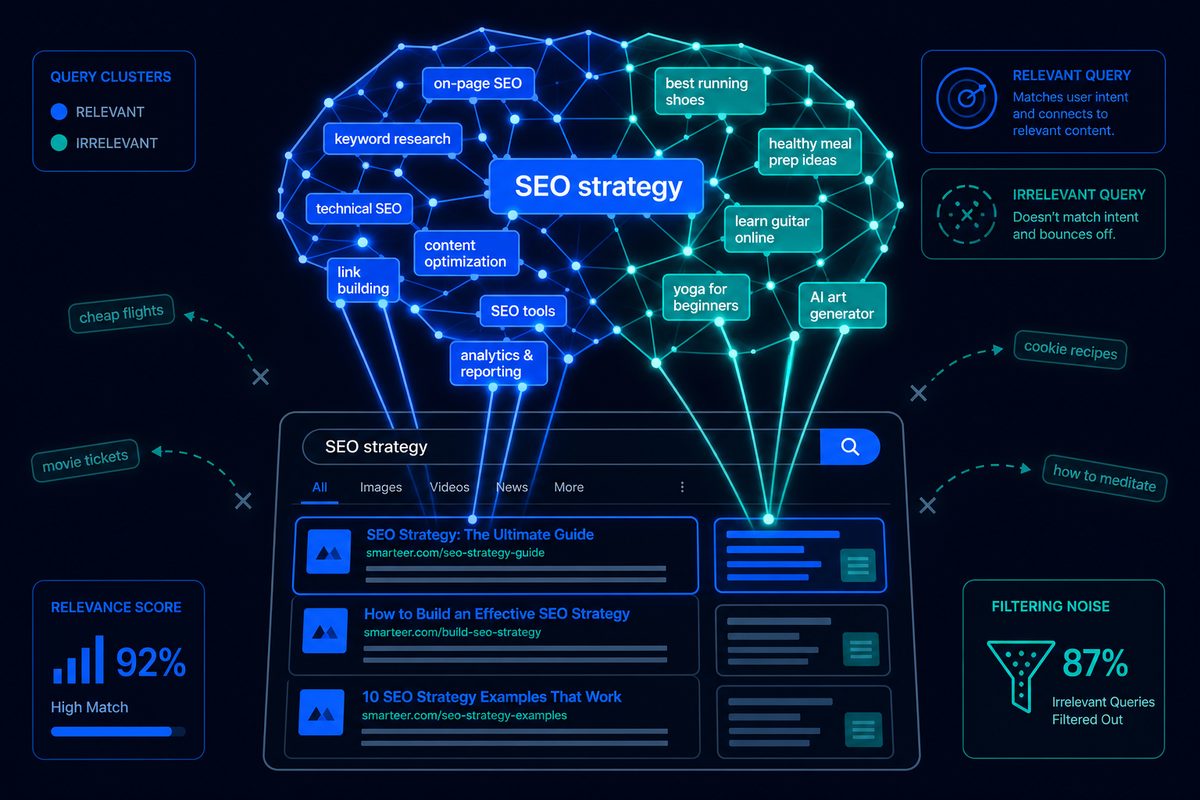
A common mistake here is targeting high-volume keywords without asking: what does someone who searches this actually want to do next? Informational queries want clear, educational answers. Transactional queries need a path to action. Navigational queries are looking for a specific brand or tool. Miss the intent and you'll struggle to rank no matter how well-written your prose is.
What we've seen work consistently is auditing the top 5 ranking pages for your target keyword before writing a single word. Look at their headers. Look at their structure. Ask: what format did Google reward here? A listicle? A how-to guide? A comparison? That format preference is a strong signal, and fighting it rarely pays off.
Keyword Research That Goes Beyond Search Volume
Search volume is a vanity metric if you don't account for competition and ranking feasibility. A keyword getting 50,000 monthly searches is useless to a new site competing against enterprise publications with domain ratings over 80. Picking the right keyword means balancing volume, competition, and your current domain authority.
Finding Keywords You Can Actually Win
Start with tools like Ahrefs, Semrush, or even the free version of Ubersuggest to filter keywords by keyword difficulty (KD). For newer sites or SMBs with limited backlink profiles, targeting keywords with a KD under 30 is far more likely to produce results within a reasonable timeframe.
Long-tail keywords often get dismissed because their individual volume looks small. In practice, a cluster of 10 long-tail terms each getting 200 searches can drive more qualified, converting traffic than one high-volume head term you'll never rank for. India-based businesses especially benefit from this approach because local and regional intent modifiers (city names, language preferences, industry-specific terms) tend to have lower competition with genuinely high commercial intent.
LSI Terms and Semantic Coverage
Google no longer just looks for exact keyword matches. It reads your content semantically. That means covering related terms, subtopics, and entities that a real expert would naturally include. If you're writing about SEO for ecommerce, a thorough post would naturally mention product schema, crawl budget, pagination, and faceted navigation. If those concepts are missing, the post signals shallow coverage.
Tools like Surfer SEO and Clearscope analyze top-ranking pages and surface the semantic terms you should include. They're not magic, but they're useful for quickly identifying coverage gaps.
Structuring Your Post the Right Way
Structure is not just about readability. It directly affects how Google understands your content hierarchy and whether featured snippets pick up your answer. A well-structured post uses headings to signal topic progression, short paragraphs to aid scanning, and ordered or unordered lists where they genuinely serve the reader.
Here's the structure that works for most informational blog posts in competitive niches:
- H1: Target keyword, specific and benefit-driven. Not just "about SEO" but "How to Rank a Blog Post in 30 Days."
- Introduction: Hook, context, keyword placement, and a preview of what they'll learn.
- H2 sections: Each covering one specific sub-question the reader has. Aim for 5 to 7.
- H3 subheadings: Used inside longer sections to break down a complex point.
- FAQ section: Targets People Also Ask queries and earns rich result placement.
- Conclusion: Summarizes key takeaways and ends with a clear next action.
One thing most writers get wrong: they treat every section like it needs equal word count. It doesn't. A section answering a simple factual question can be 80 words. A section walking through a technical process might need 400. Let the complexity of the subtopic drive the length, not an arbitrary target.
Writing Content That Demonstrates Real Expertise
Google's E-E-A-T framework (Experience, Expertise, Authoritativeness, Trustworthiness) has become one of the most discussed quality signals in SEO, and for good reason. It's the framework Google's quality raters use when evaluating whether content deserves to rank, especially in competitive or "Your Money or Your Life" (YMYL) categories.
What this actually means in practice is that your content needs to read like it was written by someone who has done the thing, not just researched it. First-person observations, specific examples from real situations, and honest acknowledgment of complexity all contribute to this signal. Generic advice that could have been assembled from a few Wikipedia pages doesn't cut it anymore.
For SMBs building a content program, the good news is that genuine industry experience is a real advantage. A regional manufacturing business in Pune writing about export compliance challenges they've actually navigated will almost always out-rank a generic agency post on the same topic, assuming the technical SEO fundamentals are in place. Your specific experience is an asset. Use it.
Author bios matter too. A named author with a clear professional background, social media presence, and consistent publishing history across the site adds trust signals that anonymous or vaguely attributed content doesn't have. This is especially important for health, finance, and legal content, but it's increasingly relevant across all verticals.
Reference specific tools, methodologies, and named frameworks where they're genuinely relevant. Dropping "we tested this using Google Search Console's performance report" is more credible than "we analyzed the data." Specificity signals expertise. Vagueness signals the opposite.
Learn how to build an E-E-A-T-optimized content strategy for your brandOn-Page SEO: The Signals You Can't Skip
Technical on-page optimization is where content strategy meets implementation. Even excellent writing underperforms if these fundamentals are absent. The good news is they're not complicated. They're just easy to overlook when you're focused on the writing.
- Title tag: Keep it under 60 characters, lead with the primary keyword where natural, and write it like an ad headline because it directly affects click-through rate in the SERP.
- Meta description: 150 to 160 characters, include the keyword, and make the value proposition specific. "Learn the 7 steps SEO experts use to rank new content in under 90 days" beats "A guide to SEO blog writing."
- URL slug: Short, keyword-first, hyphenated. Drop stop words (the, a, and). /how-to-write-seo-blog-post is better than /how-to-write-a-blog-post-for-seo-purposes.
- Image alt text: Every image needs a descriptive alt tag. Include the keyword where it's genuinely relevant to the image. Don't repeat it mechanically on every image.
- Internal linking: Link to related posts on your own site using descriptive anchor text. This passes authority and helps Google understand your content architecture.
- Page speed: A post that loads in 4 seconds will underperform the same content loading in 1.5 seconds. Use tools like PageSpeed Insights to identify issues, and compress images before uploading.
One thing we've seen consistently underestimated is the impact of content freshness. For time-sensitive topics, updating an existing post with new data and a revised publish date often outperforms writing a new post targeting the same keyword. Google favors recency for queries where it's relevant, and a post with three years of backlinks plus updated content is usually stronger than a brand-new article starting from scratch.
See our on-page SEO checklist for blog writers and content teamsHow Indian SMBs Can Build Topical Authority Without a Big Budget
Content marketing for SMBs in India presents a specific set of challenges and opportunities. Organic search budgets are often tight, English-language content competes with international publishers, and many businesses are simultaneously targeting both regional and national audiences.
The most effective approach we've seen for this context is topical authority building, which means covering a subject area so thoroughly that Google begins to treat your site as a reliable, comprehensive source on that topic. Rather than writing one post about "GST for small businesses" and hoping it ranks, a topical authority approach means building a cluster of 8 to 12 posts covering every angle of the subject: filing deadlines, input tax credit, reverse charge mechanisms, sector-specific implications, and so on.
The pillar post sits at the center of this cluster and covers the broad topic. Individual cluster posts target specific long-tail variations and link back to the pillar. This structure signals both depth and breadth of coverage to Google, and it builds internal linking architecture that distributes authority across the whole cluster.
For a B2B service business based in a Tier 1 or Tier 2 Indian city, the local angle is also genuinely underused. "Digital marketing agency Mumbai" is competitive. "B2B content strategy for manufacturing companies in Pune" is not. Specificity wins in local and regional SEO, and the conversion rates from highly specific traffic tend to be significantly better too.
Read our guide to building a topical content cluster for B2B SEOMeasuring What Actually Matters After You Publish
Publishing is step one. What you do in the 60 to 90 days after publishing determines whether a post reaches its potential or stagnates. Most content teams skip this phase, which is one reason most posts plateau after an initial burst of impressions.
The core metrics to track using Google Search Console are:
- Average position for target keyword: Is it moving? Trending from position 20 toward 10 over 4 to 6 weeks usually means it's finding traction.
- Click-through rate (CTR): A post ranking at position 5 with a 1% CTR might outperform with a better title tag. Test title variations and monitor the change.
- Queries your post is actually ranking for: Often your post ranks for keyword variations you didn't explicitly target. These are opportunities to expand the content to better serve those queries.
- Impressions without clicks: High impressions with low clicks typically signals a title or meta description problem, not a ranking problem.
At the 90-day mark, audit posts that have impressions but haven't broken the top 10. Ask whether the content depth matches what's ranking. Look at your internal links: are other posts on your site linking to this one? Consider whether the post needs a structural refresh before you write new content on the same topic.
Frequently Asked Questions
How long should a blog post be for SEO in 2025?
There's no universal word count that guarantees rankings. What matters is covering the topic completely. For competitive informational queries, this often means 1500 to 2500 words. For simpler questions, 600 to 800 words of focused, high-quality content will outperform a bloated 3000-word post that repeats itself. Match the length to the complexity of the topic and what the top-ranking pages in your niche are doing.
How often should I publish blog posts to improve SEO?
Consistency matters more than frequency. Publishing one well-researched, properly optimized post per week will outperform five rushed posts that don't address search intent. For SMBs with limited content resources, start with two to four posts per month targeting specific long-tail keywords, and focus on building topical depth in a defined area rather than spreading thinly across topics.
How long does it take for a blog post to rank on Google?
Most new blog posts from sites with moderate domain authority begin showing meaningful movement in search rankings between 3 to 6 months after publishing. Newer sites with few backlinks may wait longer. Low-competition long-tail keywords can rank faster, sometimes within 4 to 8 weeks. High-competition head terms on established topics can take 12 months or more regardless of content quality.
Do internal links help a blog post rank higher?
Yes, internal links serve two important functions. They help Google discover and crawl your content more effectively, and they pass link equity from authoritative pages on your site to newer or lower-authority posts. Use descriptive anchor text that tells both the reader and search engines what the linked page is about. Avoid linking with generic phrases like "click here."
Is AI-generated content bad for SEO in 2025?
Google's official position is that it doesn't penalize AI-generated content categorically; it penalizes low-quality, unhelpful content regardless of how it was created. The practical challenge is that most AI-generated content lacks genuine first-hand experience and specific detail, which undermines E-E-A-T signals. Used as a drafting aid with significant human editing and original expert input, AI tools can speed up production without hurting rankings. Published wholesale without review, it usually does.
Can small businesses in India compete with large websites in SEO?
Absolutely, but not by trying to rank for the same keywords as enterprise publishers. The winning strategy for Indian SMBs is to target highly specific, lower-competition keywords with strong local or niche intent, build topical authority in a focused subject area, and produce content that draws on genuine industry experience. A regional logistics company writing about freight challenges specific to Indian trade corridors has an authenticity advantage no generic content platform can replicate.
Conclusion
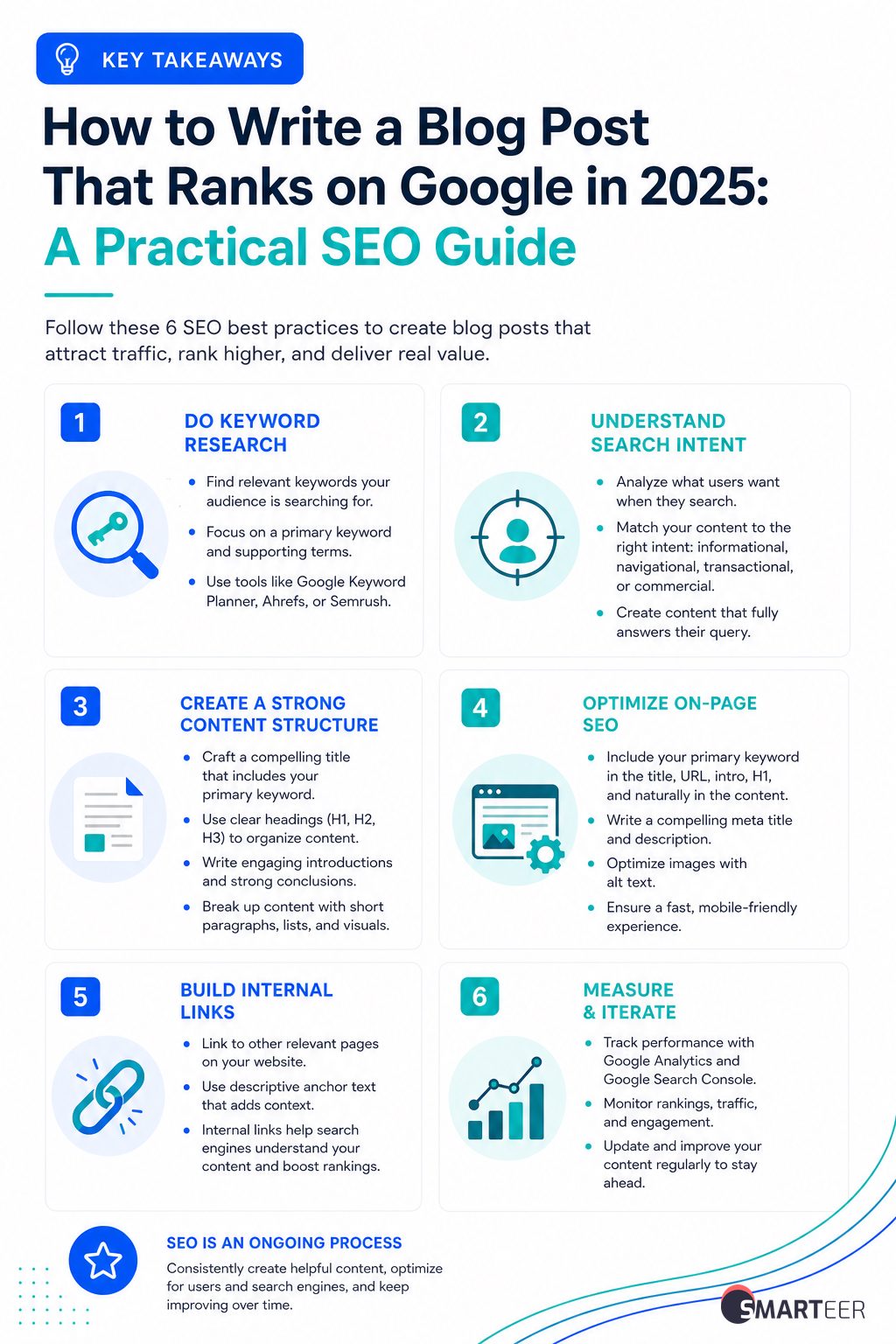
Three things determine whether a blog post ranks: you chose a keyword with achievable competition for your current authority, you matched the content format and depth to what Google is already rewarding for that query, and you wrote something specific enough to signal genuine expertise. Get those three right and the technical on-page elements are largely just execution details.
Effective SEO blog writing is not a shortcut discipline. It rewards patience, specificity, and consistent effort over time. The businesses and creators who build real organic traffic treat each post as an asset with a long shelf life, not a social media post with a 48-hour window.
Your next step: pick one specific topic where you have direct experience, find a long-tail keyword with a difficulty score under 30 using Ahrefs or Ubersuggest, and write one post this week using the structure in this guide. Then track it in Google Search Console for 90 days. That single post, done properly, will teach you more about what actually works in your niche than any course or theory could.
Smarteer Team
Get a Free Technology Consultation
Talk to our experts about your project — no commitment required.
Book a Call →Build Your MVP in 4 Weeks
Proven framework. Fixed price. From zero to live product.
Learn More →Newsletter
Get the latest insights delivered to your inbox.